











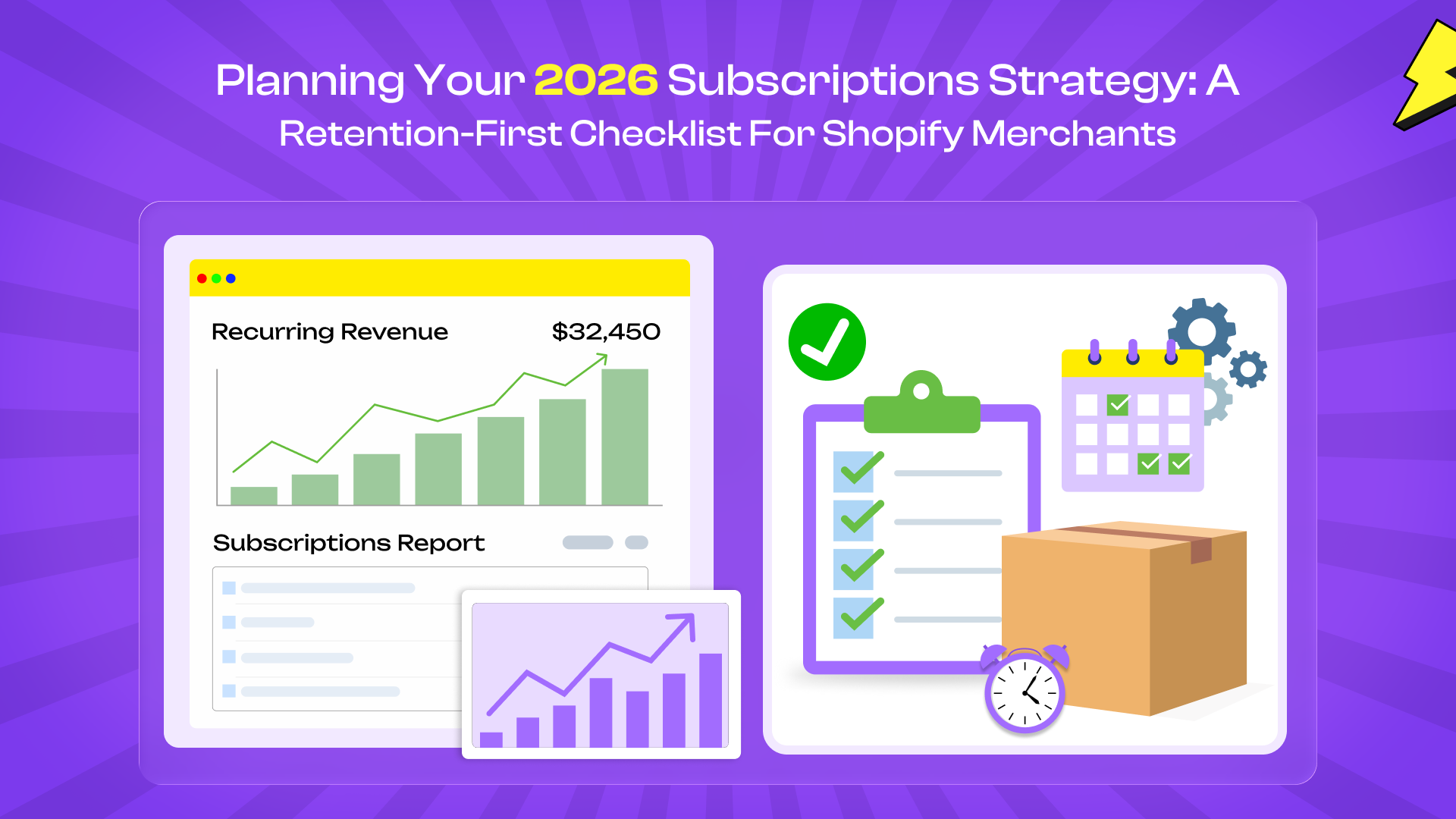
Planning Your 2026 Subscription Strategy: A Retention-First Checklist for Shopify Merchants
Published On: December 24, 2025 - 4 min read
Subscriptions are no longer an experiment—they’re a core revenue engine for modern eCommerce brands. As acquisition costs rise and customer attention becomes increasingly harder to earn, merchants who plan for retention first will outperform those who chase one-time sales.
This guide is a practical, retention-first checklist to help Shopify merchants plan a strong and sustainable subscription strategy for 2026—without overcomplicating operations or customer experience.
Whether you’re launching subscriptions for the first time or optimizing an existing program, this framework will help you build recurring revenue that compounds.
Who This Checklist Is For
This guide is especially useful if you:
- Sell products that customers buy repeatedly
- Want predictable monthly revenue instead of seasonal spikes.
- Are you planning growth and inventory for the year ahead?
- Already offer subscriptions but struggle with churn.
Subscriptions work best when they’re designed intentionally, not bolted on.
Step 1: Audit Your Repeat Purchase Behavior
Before planning anything new, start with your existing data.
Ask yourself:
- Which products are reordered most often?
- How frequently do customers naturally repurchase?
- Which products create habits or routines?
Subscriptions should follow customer behavior, not force it.
Products with natural replenishment cycles are ideal starting points.
Step 2: Decide What Should Be “Subscription-First”
Not every product belongs in a subscription.
Evaluate each product:
- Is it consumable or essential?
- Does it have a predictable usage cycle?
- Would auto-delivery remove friction for the customer?
In 2026, winning subscription brands won’t offer subscriptions on everything—they’ll offer them where they make sense.
Step 3: Design Flexible Billing & Delivery Rules
Rigid subscriptions increase churn.
Modern customers expect:
- Ability to pause or skip deliveries
- Control over delivery frequency
- Easy plan changes without support tickets
Flexibility builds trust. Trust builds retention.
Your billing rules should reduce anxiety—not create it.
Step 4: Plan for Cancellation—Before It Happens
Cancellations aren’t failures.
They’re feedback.
Before customers churn, ask:
- Are cancellation reasons clearly captured?
- Are alternatives like pause, skip, or downgrade offered?
- Is the flow respectful and transparent?
A well-designed cancellation experience can save revenue and improve brand perception—even when customers leave.
Step 5: Align Inventory With Subscription Demand
One of the most overlooked subscription mistakes is inventory mismatch.
For 2026 planning:
- Forecast demand based on active subscriptions
- Align restock cycles with renewal dates.
- Reduce overstocking caused by unpredictable one-time sales.
Subscriptions give you visibility. Planning lets you use it.
Step 6: Create a Clear Post-Purchase Subscription Path
Most subscriptions don’t start on the product page—they start after the first purchase.
Plan for:
- Post-purchase “Subscribe & Save” offers
- Email or SMS nudges after delivery
- Timing that aligns with actual product usage.
This turns first-time buyers into long-term customers—without pressure.
Step 7: Set Retention Metrics That Actually Matter
For 2026, stop chasing vanity numbers.
Focus on:
- Subscription churn rate
- Average subscription lifetime
- Revenue retained vs. revenue acquired
- Paused vs. canceled subscriptions
Retention is measurable—but only if you track the right signals.
Step 8: Make Subscriptions Easy to Manage for Customers
Customer-managed subscriptions reduce support load and increase satisfaction.
Customers should be able to:
- Edit delivery dates
- Update payment methods
- Swap products
- Manage everything from a single dashboard.
Convenience is a competitive advantage.
Step 9: Choose Tools That Support Long-Term Growth
Your subscription platform should:
- Work natively within Shopify
- Support flexible rules without custom development.
- Scale with inventory, analytics, and customer growth
- Offer reliable, human support when issues arise.
Technology should simplify strategy—not limit it.
Common Subscription Planning Mistakes to Avoid in 2026
- Launching subscriptions without understanding customer behavior
- Making cancellations difficult or confusing
- Over-discounting and hurting margins
- Ignoring inventory planning
- Treating subscriptions as a short-term growth hack
Subscriptions succeed when they’re treated as a long-term relationship, not a sales tactic.
Final Thought: Retention Compounds
One-time sales spike.
Retention compounds.
The merchants who win in 2026 won’t be the loudest—they’ll be the ones who planned early, built flexibility into their subscriptions, and focused on customer experience over shortcuts.
If subscriptions are part of your growth plan for the year ahead, now is the time to design them intentionally.
Install the Easy Subscriptions App on your Shopify store today!
Frequently Asked Questions
What is a retention-first subscription strategy?
A retention-first subscription strategy focuses on keeping customers subscribed longer by prioritizing flexibility, transparency, and customer control instead of aggressive acquisition tactics.
How do I plan a subscription strategy for Shopify in 2026?
Start by auditing repeat purchase behavior, selecting subscription-friendly products, designing flexible billing rules, aligning inventory with renewals, and tracking retention-focused metrics.
What products work best for subscriptions?
Consumable or habit-based products with predictable usage cycles—such as food, skincare, supplements, or household essentials—work best.
How can subscriptions increase recurring revenue?
Subscriptions create predictable, repeat purchases over time, allowing merchants to forecast revenue and build long-term customer relationships.
What causes high subscription churn?
Rigid plans, difficult cancellations, poor communication, and lack of customer control are the most common causes of churn.
Written by

You might also like...
The Loyalty Gap: Why Most Shopify Stores Lose Customers After the First Purchase
Most Shopify stores don’t fail because of bad products or weak marketing. They fail because...

Shubh Chopra
December 26, 2025
5 Best Shopify Discount Apps for Subscription Brands in 2026
Choosing the best Shopify discount apps for subscription brands in 2026 is more important than...

Rajwardhan Singh Thakur
December 19, 2025